
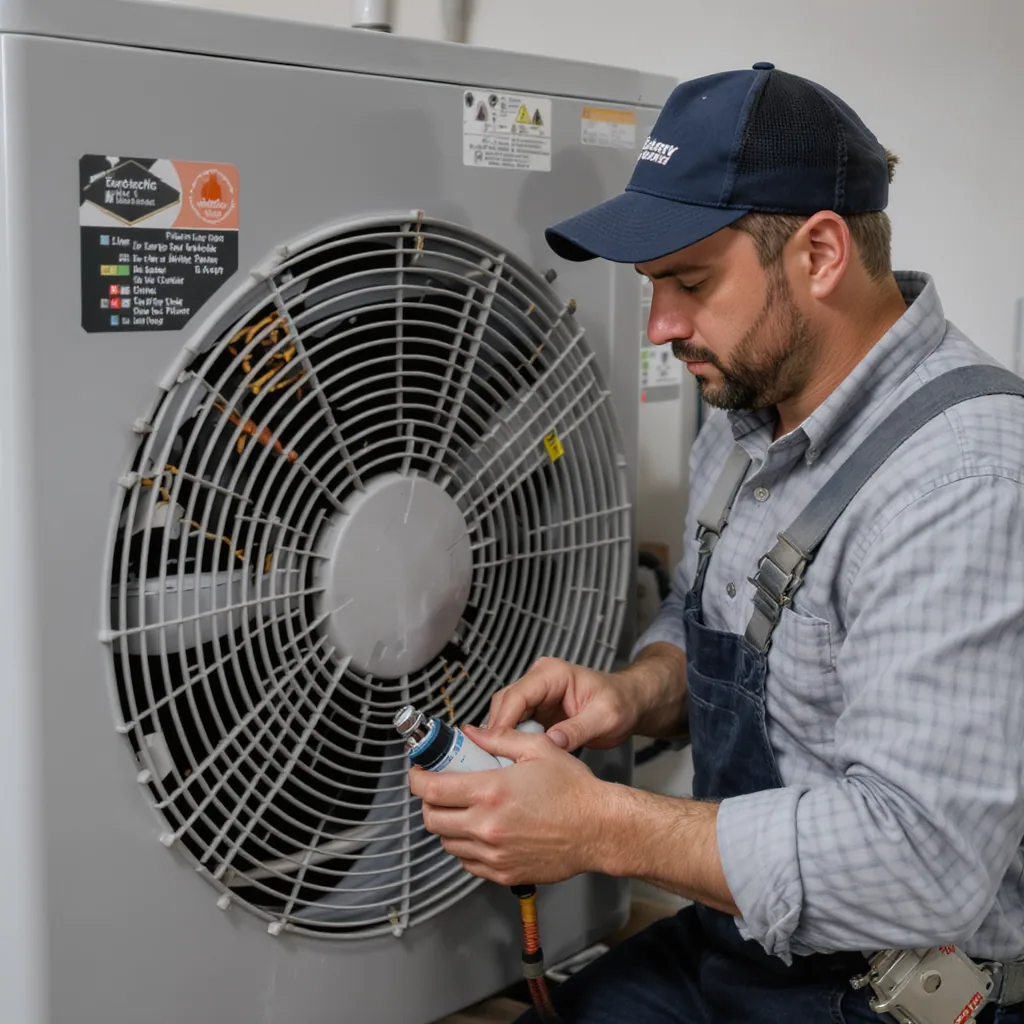
Heat Pump Troubleshooting: Repairs for Cold Climate Performance
It’s -10°C outside, and your heat pump is blowing lukarm air. The thermostat is set for 21°C, but the house is dropping to 16°C. You’re wondering if this is normal ‘cold climate performance’ or if something’s broken. I’ve been on that service call dozens of times.
This guide cuts through the theory. We’ll walk through what’s actually happening and give you a practical, step-by-step flow to diagnose common cold-climate failures. The goal is simple: you’ll know what to check first, what to tell your technician, and which repairs actually make sense for your climate and your budget.
The Cold-Climate Failure Point: Understanding the Defrost Cycle
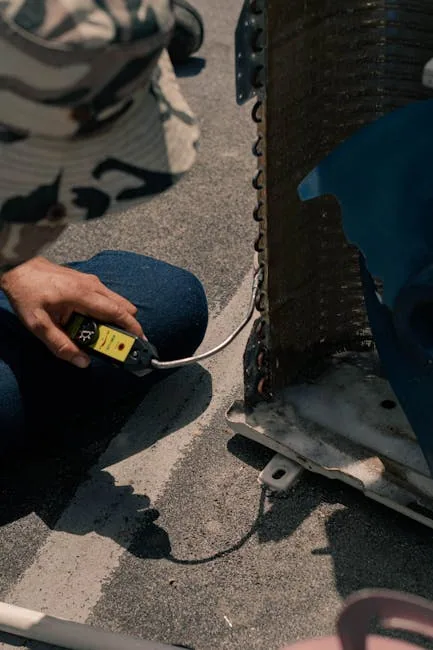
Photo by José Andrés Pacheco Cortes on Pexels
I can’t tell you how many times I’ve shown up to a “broken” heat pump in January, only to find a perfectly good compressor locked inside a tomb of ice. The homeowner is often told they need a whole new unit. Nine times out of ten, they don’t. They need a functioning defrost cycle. This is the single most critical system for winter operation, and when it fails, your heat pump stops being a heater.
Here’s the practical reality: a heat pump extracts heat from outdoor air, even when it’s cold. That process cools the outdoor coil below the dew point, causing moisture in the air to freeze on it. This is normal. The defrost cycle is the unit’s built-in de-icing routine. It temporarily reverses the refrigerant flow, switching the outdoor coil into a “condenser” to melt the frost. The indoor fan usually stops, and your auxiliary heat strips kick on to prevent blowing cold air into the house during this brief 3-10 minute period.
When this cycle fails, you get distinct, observable symptoms:
- The Unit is a Solid Block of Ice: Not just a light frost, but a thick, uniform coating over the entire coil and fan. This is a clear signal the defrost cycle isn’t initiating. Likely culprits are a failed defrost thermostat (a sensor that tells the board when to defrost) or a faulty control board.
- Constant, Short Defrost Cycling: The unit goes into defrost every 5-10 minutes, melts a little ice, then goes back to heating for only a minute before defrosting again. This screams “low refrigerant charge.” There isn’t enough refrigerant to effectively transfer heat, so the coil gets too cold too fast, triggering defrost prematurely. It can also point to a failing reversing valve that’s stuck partway.
- No Defrost at All, But the Unit Runs: You hear the compressor and fan, but ice builds up relentlessly. Beyond the sensor or board, this could be a stuck reversing valve that physically cannot switch the system into defrost mode, or a loss of power to the defrost control circuit.
Your action here is observation. If your unit is iced over, wait and listen. You should hear the outdoor fan stop and a distinct change in the compressor’s sound (a deeper hum or a hiss) as it reverses. If that doesn’t happen within 10-15 minutes of heavy frost buildup, you’ve diagnosed a defrost failure. This is the #1 issue I log on winter service calls, and pinpointing it for your technician gets you heat faster.
Diagnosing Low Heat Output: It’s Not Always the Pump
So your heat pump is running but the house is still chilly. Before you condemn it, you need to separate a true malfunction from the unit’s natural capacity limits and from problems that look like pump failure. In cold climates, two issues are most common: crippled airflow and incorrect refrigerant charge.
First, manage expectations. The air from your vents will feel cooler than what you’d get from a furnace. A supply air temperature of 35-45°C (95-113°F) is typical for a heat pump in heating mode, even when working perfectly. The real test is whether the system can maintain your set temperature over time. If the temperature in your house is steadily dropping while the system runs non-stop, you have a problem.
Airflow is Everything. A restricted airflow path forces the system to work harder, reduces efficiency, and can cause freezing. The indoor coil needs a specific volume of air passing over it to absorb the heat the refrigerant is releasing. Your first check is always the air filter. A filter that looks dark or clogged is a problem—replace it. But filters are just the start. Blower wheels caked with dust, closed or blocked supply vents, and a dirty indoor evaporator coil all have the same effect. A simple, practical check you can do: using a meat thermometer, measure the temperature of the air going into the return vent and the air coming out of a supply vent closest to the indoor air handler. The difference (the temperature rise) should typically be between 10-17°C (18-30°F). If it’s less than 8°C, you likely have an airflow or refrigerant issue.
Refrigerant Charge is Non-Negotiable. This isn’t like engine oil; refrigerant doesn’t get “used up.” The system is sealed. A low charge means there’s a leak. In heating mode, a low charge has clear symptoms: reduced heating capacity (the house never gets warm), ice forming on the suction line (the larger, insulated copper pipe) all the way back to the compressor, and that short-cycling defrost behavior I mentioned earlier. The coil may also show an uneven frost pattern. Checking and correcting charge is absolutely not a DIY task—it requires gauges, an understanding of the pressure-temperature relationship for your specific refrigerant, and, crucially, the manufacturer’s cold-weather charging charts. As noted in most manufacturer technical manuals, charging by pressure alone in low ambient conditions will almost certainly result in an incorrect, damaging charge. Your job is to spot the symptoms and tell your tech, “I suspect a low charge—here’s what I’m seeing.”
When Auxiliary Heat Fails to Back You Up
In a well-designed cold-climate system, the heat pump is the primary worker, but the auxiliary heat is the essential backup. It’s supposed to engage automatically during defrost cycles and when the heat pump alone can’t meet the thermostat’s demand (usually when it’s below the system’s balance point, often around -5 to -10°C). When this backup fails, you’re left with a struggling heat pump and a cold house. Let’s break down the common failure points so you know what to ask about.
For electric systems, auxiliary heat is provided by banks of electric resistance heating elements (heat strips) inside your air handler. They’re controlled by a sequencer or relays. Failure modes here are straightforward: the heat strips themselves can burn out, or the sequencer that powers them can fail. You might hear a clicking sound from the air handler when heat is called for, but feel no warmth from the vents. A critical safety note: DO NOT open the panel to inspect heat strips yourself without shutting off power at the breaker. The voltages inside are lethal.
For systems with a gas or propane furnace as backup, the failure points are typical furnace issues: a faulty igniter, flame sensor, or gas valve. You might hear the furnace try to start (the inducer motor will run) but it never produces a flame.
Here’s your powerful diagnostic trick. Find your thermostat. If it has an “Em Heat” or “Emergency Heat” mode, switch to it. This setting bypasses the heat pump entirely and runs only your auxiliary heat. If you get strong, hot air from the vents in this mode, then your backup system works. This tells you the heat pump is the sole problem—a huge piece of information for your service call. If you get no heat in Em Heat mode, then you have a compound failure: both your heat pump and your backup are down, which points to a possible control issue or two separate failures.
Making the Repair Decision: Cost vs. Benefit in Your Climate
Let’s say the technician arrives and gives you a diagnosis. Now you face the real-world decision: repair or replace? This isn’t just about the repair bill; it’s about the expected lifespan, your local weather, and part availability. Let’s talk through it like I would with a client in my truck.
First, weigh the repair against the unit’s age. A $200 defrost sensor replacement on a 6-year-old unit is a no-brainer. A $1,200 reversing valve repair on a 12-year-old unit is a tougher call. Heat pumps have a typical service life of 12-15 years. Sinking a major repair into a unit in its second decade is often a band-aid; another major component could fail next season. Ask your technician: “Given the age and this failure, does this repair buy me three to five reliable winters, or is it likely just the first of several big bills?”
Second, consider part availability for older models. I’ve spent days tracking down a discontinued board for a 14-year-old unit. That’s days you spend without reliable heat, and the labor cost adds up. Sometimes, the most practical “repair” is a planned replacement with a modern, more efficient cold-climate model.
If you’re waiting for a part or a service call and you’re facing a defrost failure, there is a temporary, last-resort measure. With the unit’s power turned completely OFF at the breaker, you can gently pour warm water over the iced outdoor coil to melt the ice away. This is not a fix, but it can free the fan and allow the unit to provide heat for a few hours until it frosts over again. It gets you through a cold night. Never use sharp tools to chip ice, as you will damage the delicate fins of the coil.
Your final question should be climate-specific. “For our winter temperatures that regularly hit -15°C, is this system, even repaired, appropriately sized and capable?” An undersized or poorly matched system will struggle forever. The repair might be sound, but the system might still be wrong for your house. This is where a good technician shifts from parts-changer to consultant.
Where Well-Meaning Homeowners Get Stuck
Even with the best intentions, it’s easy to misinterpret what’s happening with your heat pump. Here are the most common pitfalls I see, so you can avoid them.
Assuming ‘Cold Air’ from Vents Means It’s Broken: This is the top misconception. Heat pump supply air is deliberately cooler (35-45°C) than furnace air (50-60°C). Feeling it at the vent is misleading and can cause you to switch to expensive emergency heat unnecessarily. The real test is whether the system is maintaining room temperature over hours.
Switching Thermostat to ‘Emergency Heat’ Indefinitely: This turns off the heat pump completely and runs only the backup electric heat strips or furnace. While it provides hot air, it does so at 2-3 times the operating cost. It’s for true emergencies or confirmed heat pump failure. Using it as a routine setting will shock you when the utility bill arrives.
Ignoring Air Filters Because ‘It’s a Heating Problem’: A dirty filter is the single most common cause of reduced performance. Restricted airflow causes the indoor coil to get too cold, can lead to freezing, forces the compressor to work harder, and starves your home of warm air. It’s always the first thing I check, and it should be yours too.
Trying to Add Refrigerant Without a Leak Search: Refrigerant is not a consumable fuel. A low charge means there is a leak. Simply adding more refrigerant (often called “topping off”) is illegal under EPA regulations, damages the environment, is a temporary fix at best, and can harm the compressor by causing it to overheat. The only proper repair is to find the leak, fix it, evacuate the system, and then charge it to the precise specification. Any technician who suggests just adding gas is not solving your problem.
Your Next Step
Cold-climate heat pump performance hinges on a few key, practical systems: a robust defrost cycle, the correct refrigerant charge, and clean airflow. When any one of these fails, your comfort fails with it. The goal of this guide isn’t to make you a technician, but to make you an informed owner. You now know what to listen for, what to look at, and how to describe the problem.
That knowledge saves you time, money, and frustration. It helps you ask the right questions and understand the answers. If you’ve run through the initial checklist and your home is still losing the battle with the cold, your next step is decisive: call a qualified HVAC technician. Before you do, write down your observations. “Outdoor unit iced solid, no defrost cycle heard,” or “Auxiliary heat works in Em Heat mode, but heat pump output is lukewarm.” Handing those notes to your tech is the fastest path from diagnosis to warm air.
For a practical walkthrough, see Air Conditioner Lifespan.