
Appliance Repair vs Replace: The Complete Financial & Functional Guide
The decision to repair or replace a malfunctioning appliance is a structured financial and functional analysis, not a guess. This guide provides the methodical framework and calculable thresholds required to make a technically sound, cost-optimal decision. Expert consensus in home economics and maintenance engineering holds that a systematic approach, grounded in industry standards for appliance lifespan and efficiency, is critical for long-term asset management and avoiding recurring costs.
This analysis will establish a standards-based decision matrix using measurable variables: appliance age, repair cost ratios, functional degradation, and efficiency differentials. We will move beyond anecdotal advice to a repeatable assessment process that aligns your choice with defensible financial logic and projected functional reliability.
Defining the Decision Framework: Core Variables and Standards

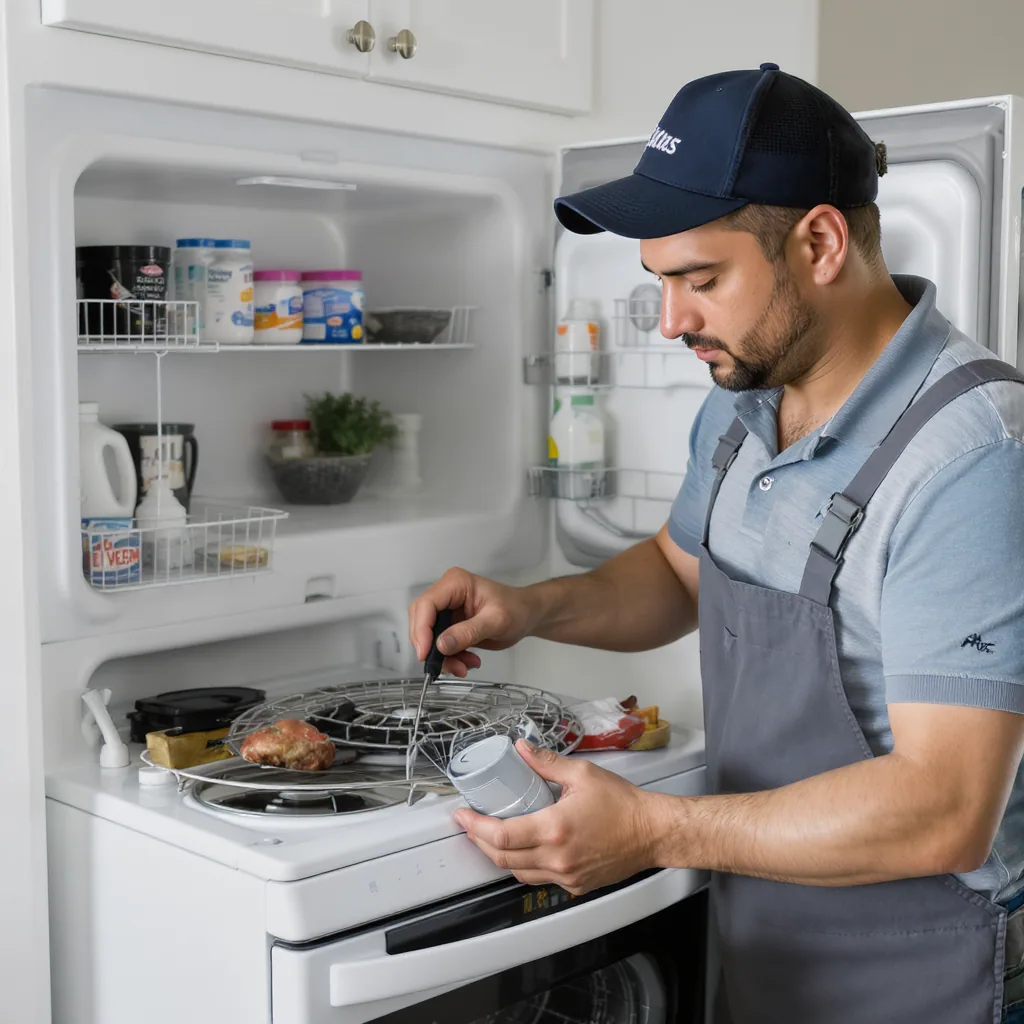
Photo by MART PRODUCTION on Pexels
The decision to repair or replace a malfunctioning appliance is not a singular choice but a multi-variable optimization problem. To solve it methodically, we must first define and bound the core decision drivers. These are categorized into three interdependent domains: Financial (Direct Cost), Functional (Lifespan and Reliability), and Efficiency (Operational Cost). A sound analysis requires quantifiable data from each domain, moving the decision from emotional reaction to technical evaluation.
The foundational standard for functional assessment is the Expected Useful Life (EUL). This is a statistical estimate, derived from industry data, of the typical operational lifespan before a major failure or systemic degradation renders replacement more economical than continued repair. According to data compiled by the National Association of Home Builders in cooperation with appliance manufacturers, the mean EUL for major appliances is: refrigerators (13 years), electric ranges (13 years), gas ranges (15 years), dishwashers (9 years), clothes washers (10 years), and clothes dryers (13 years). These figures serve as the baseline against which an individual appliance’s age is measured.
From these domains, we derive calculable metrics. The Repair Cost Ratio (RCR) is the repair estimate divided by the total cost of a comparable new replacement (including installation and haul-away). The Remaining Lifespan Percentage is calculated as: [(EUL – Current Age) / EUL] x 100. For efficiency, the key metric is the Simple Payback Period: the time required for operational savings to recoup the price premium of a more efficient model. The decision logic flows hierarchically: first, apply the high-level financial filter (the 50% Rule). If the result is ambiguous, proceed to integrate functional lifespan and efficiency calculations into a weighted matrix for a final, defensible verdict.
Financial Analysis: The 50% Rule and Cost-Benefit Thresholds
The 50% Rule is the most cited heuristic in repair/replace analysis, and for good reason: it establishes a clear, initial cost threshold. The rule states: if the cost of a professional repair exceeds 50% of the current price of a comparable new appliance, replacement is typically the more prudent financial path. Its rationale is rooted in depreciation and risk. An appliance is a depreciating asset. Investing a sum greater than half its current replacement value into an aged unit with an uncertain future is a high-risk allocation of capital, as a subsequent failure would render the initial repair investment a total loss.
Proper application is critical. The denominator must be the current total cost to replace. This includes the sale price of a functionally equivalent new model (research using major retailers, not the original MSRP), plus any standard delivery, installation, and haul-away fees. For example, a $600 repair quote for a refrigerator seems high, but if a comparable new model costs $1,800 installed, the RCR is 33% ($600/$1,800), favoring repair under this initial filter. Deviations from the rule are warranted in specific scenarios. For a high-end, built-in appliance where a “comparable” replacement costs $5,000, a $1,300 repair (a 26% ratio) on a 7-year-old unit may be justifiable. Conversely, a $400 repair on a basic, 12-year-old washer nearing the end of its EUL, even if below 50%, may still signal replacement due to functional exhaustion.
For appliances in the middle of their lifespan, a more nuanced financial analysis is the “Repair Cost vs. Annual Depreciation” comparison. Calculate the appliance’s current depreciated value (a simple straight-line depreciation from purchase price to zero over its EUL). Then, estimate its value post-repair—often slightly higher than its pre-failure value but still following the depreciation curve. If the repair cost is greater than the one-year depreciation hit you would take by replacing it now, replacement may be financially smoother. This method is particularly useful for business or rental property accounting, where asset valuation is tracked.
Functional and Lifespan Assessment: Calculating Remaining Value
Financial thresholds are blind to mechanical reality. An appliance’s position on its Expected Useful Life curve is the primary indicator of future reliability. An appliance at 90% of its EUL has a statistically higher probability of a subsequent major failure than one at 50%. The calculation is straightforward: for a 9-year-old dishwasher with a 9-year EUL, it is at 100% of its expected life. Its remaining value, from a reliability standpoint, is near zero. A 7-year-old refrigerator with a 13-year EUL is at approximately 54% of its EUL, suggesting a more substantial remaining functional runway, provided the current repair is not systemic.
This probabilistic view must be tempered by the appliance’s specific repair history, a data point often overlooked. A single, isolated failure is different from a pattern. For instance, a washing machine that has required a new drain pump, door latch, and now a main control board within a 24-month period is signaling accelerated, systemic degradation. Each repair in isolation might pass the 50% Rule, but cumulatively, they indicate a failing system. The effective remaining lifespan is thereby shortened. A practical rule is to apply a cumulative cost threshold: if total repairs exceed 100% of the appliance’s current replacement cost within a rolling 2-3 year window, replacement is almost always indicated regardless of the immediate repair cost.
Functionality also encompasses obsolescence. An appliance may operate but lack modern standards that impact safety, performance, or convenience. This includes older refrigerators using R-22 refrigerant (phased out for environmental reasons), dryers without moisture sensors that over-dry clothes, or dishwashers so loud they disrupt household activity. Functional obsolescence is a legitimate replacement driver when the performance deficit has a tangible cost or quality-of-life impact that the user values. The decision authority for this factor often references manufacturer technical manuals and consumer product testing, which document performance evolution across model generations.
The Efficiency Equation: Modeling Operational Cost Savings
Replacing an aging appliance with a high-efficiency model presents a potential for operational cost savings, but this must be modeled, not assumed. The primary tools for this are the government-mandated EnergyGuide label (for energy) and Water Factor ratings (for water). The EnergyGuide label provides the estimated yearly electricity cost based on a national average rate. To personalize this, you need your local utility cost per kilowatt-hour (kWh).
The step-by-step calculation for annual electrical savings is: (Old Unit Annual kWh × $/kWh) − (New Unit Annual kWh × $/kWh) = Annual Savings. You can find the kWh/year for a new model on its EnergyGuide label or spec sheet. For the old unit, you may need to use a plug-in energy monitor or reference its original documentation. For water-using appliances like dishwashers and clothes washers, calculate water savings similarly using your cost per gallon and the gallons-per-cycle data. As a practical example, replacing a 15-year-old refrigerator using 700 kWh/year with a new model using 350 kWh/year, at $0.15/kWh, yields annual savings of $52.50.
The critical question is whether these savings justify the replacement premium. This is answered by the Simple Payback Period: (Price Premium of Efficient Model) / (Annual Operational Cost Savings) = Payback Period (in years). The “price premium” is the difference between the cost of a standard-efficiency replacement and the high-efficiency model you’re considering. If the calculated payback period is shorter than your expected ownership period of the new appliance, the investment is financially sound. If the payback period is 12 years but you only plan to live in the home for 5 years, the efficiency argument is weak. Always factor in available utility rebates for ENERGY STAR® or other high-efficiency models, as they directly reduce the upfront price premium and shorten the payback period.
The Integrated Decision Matrix: From Variables to Verdict
With variables quantified, the final step is synthesis. A weighted decision matrix prevents over-indexing on a single factor. Below is a proposed framework. Each factor is scored, and the aggregate score points toward a recommendation.
| Decision Factor | Metric/Threshold | Score (Example) | Weight |
|---|---|---|---|
| Repair Cost Ratio (RCR) | > 50% = +2 Replace, 30-50% = 0 Neutral, < 30% = +2 Repair | Varies | High (30%) |
| Appliance Age (% of EUL) | > 80% = +2 Replace, 50-80% = 0 Neutral, < 50% = +2 Repair | Varies | High (30%) |
| Repair Frequency (Last 3 yrs) | > 2 repairs = +2 Replace, 1 repair = 0 Neutral, 0 repairs = +1 Repair | Varies | Medium (20%) |
| Efficiency Payback Period | > 10 yrs = +1 Repair, 5-10 yrs = 0 Neutral, < 5 yrs = +1 Replace | Varies | Medium (15%) |
| Functional Obsolescence | Significant deficit = +1 Replace, Minor/None = 0 Neutral | Varies | Low (5%) |
Walkthrough: A 7-year-old dishwasher (9-yr EUL = 78% of life) has a $400 repair quote. A comparable new unit costs $850 installed (RCR = 47%). It has had one prior repair. A high-efficiency model would have a 7-year payback, and it is functionally adequate. Scoring: RCR (0), Age (+2 Replace), Repair Frequency (0), Payback (0), Obsolescence (0). Weighted, the “Age” factor heavily pushes the decision toward replacement. User-specific weights can be adjusted; a landlord might weight Repair Cost and Age highest, while an environmentally conscious owner might weight Efficiency Payback more. The matrix makes these trade-offs explicit.
Execution and Risk Mitigation: Next Steps for Either Path
Once the analysis dictates a path, execution must uphold the decision’s integrity. If repairing, technician selection is paramount. Seek a company with certified technicians specific to your appliance brand (many manufacturers have certified service networks). The diagnosis should result in a detailed written estimate listing parts, labor, and any diagnostic fee. Crucially, ensure the repair is backed by a warranty covering both parts and labor for at least 90 days; one year is the standard for major components. This warranty protects your repair investment, a non-negotiable term given the financial analysis you’ve conducted.
If replacing, your analysis has already defined key selection criteria. Purchase a model that meets or exceeds the efficiency tier that justified the payback period. Consult reliability and performance data from independent consumer standards organizations like Consumer Reports to narrow brand and model choices. Factor the total cost of ownership: a slightly higher upfront cost for a unit with a proven track record of reliability and lower repair rates often outweighs a minimal initial savings on a less reliable brand. For comprehensive guidance on modern features and performance benchmarks, resources like the U.S. Department of Energy’s appliance standards provide essential context.
Disposal logistics are part of the replacement cost. Retailers often include haul-away, but verify this. For refrigerators and freezers, proper recovery of refrigerants (like older R-22 or current R-134a) is an environmental and often legal requirement handled by professionals. For the repair path, ensure the technician disposes of any replaced parts, especially hazardous components, responsibly. The final verification is a post-decision checklist: compare the actual outcome (final repair bill, installed appliance specs) to the parameters used in your matrix. This closes the loop and validates the methodological approach for future decisions.
Common Analytical Errors in the Repair/Replace Decision
Even with a framework, cognitive biases and procedural shortcuts lead to suboptimal outcomes. The most frequent error is using the appliance’s original purchase price as the denominator for the 50% Rule. An appliance bought for $1,200 a decade ago may have a current comparable replacement cost of only $800. A $450 repair is 56% of the current cost, favoring replacement, but only 38% of the original price, misleadingly favoring repair. Always research the present-day market for an accurate ratio.
Another critical mistake is assessing each repair in a vacuum. A series of $200 repairs every year feels manageable, but cumulatively, they represent a significant and recurring capital outlay on a depreciating asset. This pattern is a stronger indicator of systemic failure than any single repair cost. Maintaining a simple log of all repairs, with dates and costs, provides the data needed to identify this trend and trigger a replacement based on cumulative cost exceeding a replacement threshold.
Overvaluing marginal efficiency gains is a common financial misstep. The allure of “saving on utility bills” can obscure a poor investment. If the Simple Payback Period for the efficiency premium exceeds the expected useful life of the new appliance itself, you will never realize net savings. For instance, paying a $500 premium for a refrigerator that saves $20/year has a 25-year payback, far longer than the appliance’s life. The efficiency upgrade, in that case, is a lifestyle or environmental choice, not a financial one.
Finally, attempting to bypass the professional diagnosis is a high-risk procedural failure. Self-diagnosis based on online symptom guides is notoriously unreliable. What appears to be a $50 thermal fuse in a dryer may be a symptom of a failing heating element or a restricted vent, leading to a quick repeat failure. The professional diagnosis fee is the essential cost of acquiring accurate data. Proceeding without it is equivalent to making a financial forecast with guessed numbers—the result is not analysis, but speculation.
Your Next Step
The repair versus replace decision, when deconstructed, is reducible to a series of calculable operations on known variables. It is a technical analysis problem solvable through the sequential application of the 50% Rule, lifespan percentage assessment, and efficiency payback modeling, synthesized within a weighted decision matrix. This structured approach eliminates the ambiguity and emotional stress that typically accompany a major appliance failure, replacing it with a clear, defensible logic.
Your immediate next step is to initiate the data acquisition phase: schedule a professional diagnostic visit for the malfunctioning appliance. With a formal repair quote in hand, you can execute the analysis outlined here. Reference the Expected Useful Life tables, model the operational savings using your local utility rates, and populate the decision matrix factors. Whether the outcome points to a warranted repair or a strategic replacement, you will have made a choice grounded in long-term value optimization, not short-term panic or guesswork.
In essence, this method transforms a common household dilemma into a manageable technical process. By adhering to this standards-based framework, you ensure that your financial and functional resources are allocated in the most rational, cost-effective manner possible, providing clarity and confidence in your decision.
Key Takeaways
- Use the 50% Rule as a primary financial filter: If the professional repair cost exceeds 50% of the current total cost to replace with a comparable new unit (including installation), replacement is typically the more prudent path.
- Calculate lifespan position: Determine the appliance’s age as a percentage of its Expected Useful Life (EUL). Beyond 75-80% of EUL, the probability of subsequent failures increases significantly, favoring replacement.
- Model efficiency gains precisely: Calculate the Simple Payback Period for a more efficient model. Only consider efficiency a primary reason for replacement if the payback period is shorter than your expected ownership period.
- Employ integrated analysis: Avoid making a decision based on a single factor. Use a decision matrix that weights repair cost, age, repair history, and efficiency together to see the complete picture.
- Require professional diagnosis: A paid, professional diagnosis is a non-negotiable input cost for reliable analysis. Never base a final repair/replace decision on speculation about the fault’s nature or cost.
Frequently Asked Questions
Is the 50% Rule a hard-and-fast rule, or are there exceptions? It is a robust heuristic, not an absolute law. Exceptions include: repairing vintage/high-end appliances where replacement cost is extraordinarily high, addressing simple, inexpensive failures on very new appliances, or when a repair (like a sealed system fix on a refrigerator) carries a long-term warranty that effectively resets the unit’s lifespan.
How do I find the Expected Useful Life (EUL) for my specific appliance model? The industry-standard EULs provided by organizations like the NAHB are averages across brands and models. For a more model-specific estimate, consult the manufacturer’s product literature or warranty terms; a longer full warranty period often correlates with a longer engineered lifespan. However, for the purpose of the decision matrix, the industry averages are a sufficiently reliable baseline.
What if my appliance is working but very inefficient? Should I replace it preemptively? Preemptive replacement is solely an economic calculation based on the efficiency payback period. If the appliance is functional and not at high risk of imminent failure, calculate the annual savings of a new model versus its total cost. If the simple payback period is less than half the new appliance’s expected life (e.g., less than 5-6 years), preemptive replacement can be justified. Otherwise, it is more economical to run the existing unit until a repair is needed or it fails.
How
For a practical walkthrough, see Home Exterior Repair vs Renovation.