The decision to repair an aging air conditioner or invest in a new, high-efficiency unit is a technical cost-benefit analysis, not merely a financial one. It requires evaluating equipment performance against established engineering standards, calculating degradation curves, and projecting energy consumption with measurable precision.
This analysis provides a method-driven framework for the repair-versus-replace decision, grounded in AHRI performance data, ACCA Manual J load calculations, and lifecycle cost analysis. We will examine the objective criteria—age, efficiency loss, repair cost thresholds, and SEER-based savings—that determine the optimal path for system longevity and operational economy.
Defining the Operational Lifespan: Standards and Real-World Degradation
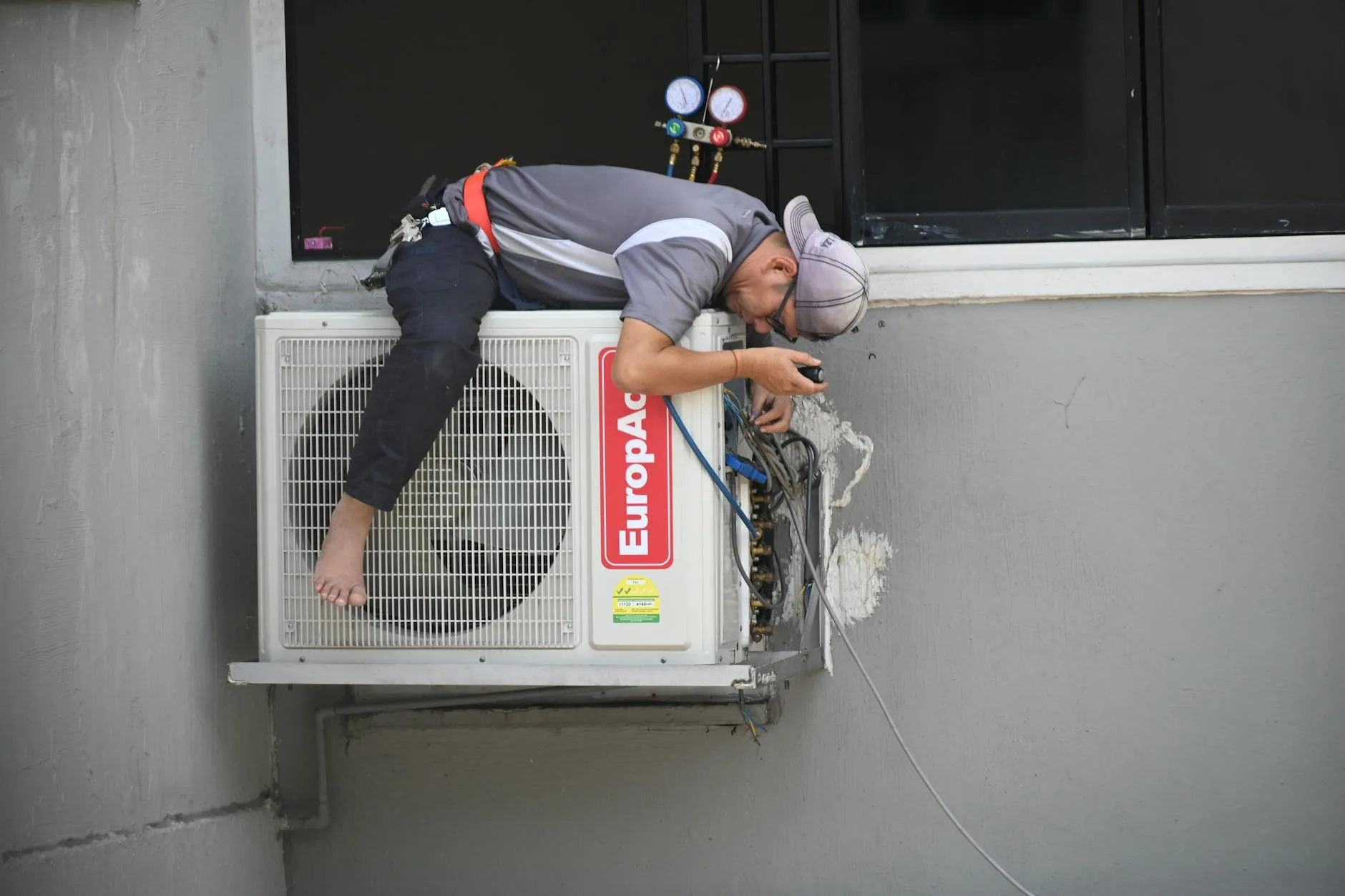
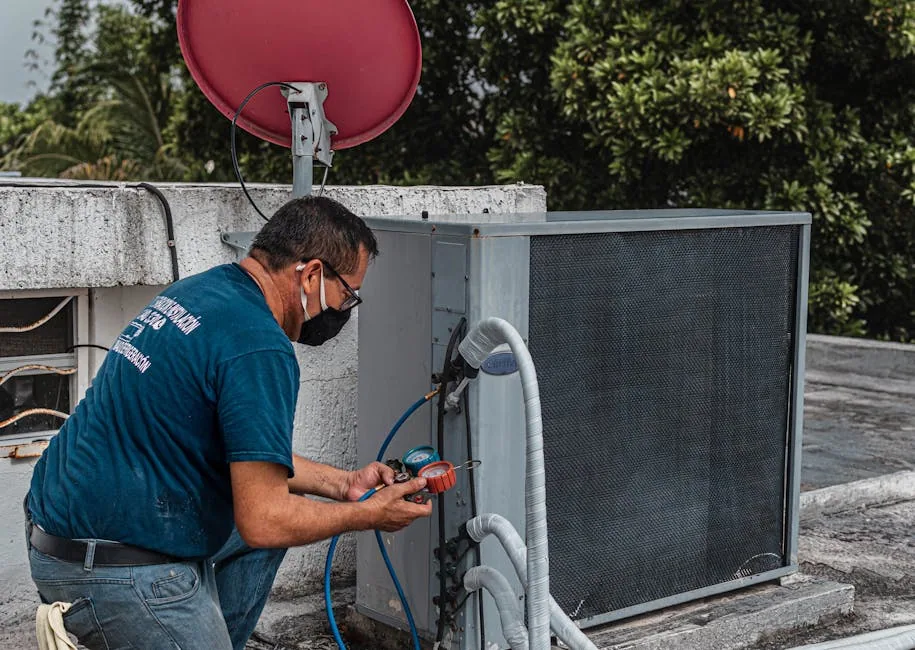
Technician Defines The Real-world Lifespan Standards For Air Conditioner Repair
The first technical parameter to establish is the expected service life of your air conditioning equipment. Manufacturers typically cite a design life of 15 to 20 years under ideal conditions. However, the effective service life—the period of reliable, cost-effective operation—is governed by operational cycles, maintenance history, and external regulatory factors, and is often closer to 12-15 years. This distinction is critical for a rational repair-or-replace analysis.
Industry standards provide the framework for understanding these limits. The Air-Conditioning, Heating, and Refrigeration Institute (AHRI) sets performance testing protocols under standard AHRI 210/240, which defines metrics like SEER. For equipment selection and sizing, the Air Conditioning Contractors of America (ACCA) Manual S is the definitive guide. Furthermore, organizations like ASHRAE publish equipment life expectancy data that forms the basis for realistic financial modeling. These standards collectively inform what a system is designed to do and how long it can reasonably be expected to perform.
A central concept in this evaluation is performance degradation. An air conditioner does not operate at its rated efficiency and capacity for its entire life. Factors such as coil fouling (reducing heat transfer), gradual refrigerant charge drift, bearing wear in the fan motors, and compressor valve wear collectively degrade performance. Studies referenced in ASHRAE guidelines indicate that a poorly maintained system can lose 5% or more of its efficiency annually, while a well-maintained one may still see a cumulative degradation of 15-20% over 15 years. This means a unit originally rated at SEER 13 may effectively operate at SEER 11 or lower in its later years, directly increasing your annual energy expenditure and altering the cost-benefit analysis of a repair.
The Repair Path: Analyzing Cost, Component Failure, and System Integrity
When a failure occurs, a detailed analysis of the repair quote is required. The most cited heuristic is the 50% Rule: if the cost of a single repair approaches 50% of the installed cost of a new, comparable system, replacement becomes the economically rational choice. This rule accounts for the diminished remaining value of the old asset. A more nuanced, age-weighted version is the $5,000 Rule (detailed in the primary step guide), which multiplies repair cost by unit age; a product over $5,000 strongly suggests replacement.
The technical nature of the failed component is a decisive signal. A minor repair, such as replacing a capacitor, contactor, or fan motor, typically does not indicate systemic failure. However, a major repair involving the compressor or evaporator coil is often a terminal diagnosis for an older unit. The compressor is the heart of the system; its failure frequently results from years of wear, acid formation from motor burnout, or suboptimal operating conditions that have also stressed other components. Replacing it in a 12-year-old system often leads to a cascade failure, where another major component, like the condenser coil, fails within 1-3 years due to shared age and stress.
An objective authority on component lifespan can be found in manufacturer technical manuals, which provide mean time between failure (MTBF) estimates for major assemblies. Furthermore, the regulatory environment imposes a hard limit: units manufactured before 2010 likely use R-22 refrigerant, which is no longer produced. Repairing a leak in such a system involves increasingly scarce and expensive refrigerant, making each repair less viable and future repairs a near certainty. The escalating cost and environmental mandate phase out R-22, making continued investment in these systems a high-risk proposition.
The Replacement Path: Quantifying SEER Ratings and True Energy Savings
Evaluating a new system requires moving beyond marketing claims to understand the engineering metrics. SEER (Seasonal Energy Efficiency Ratio) is precisely defined by AHRI 210/240 as the total cooling output (in British Thermal Units, or BTUs) provided during a typical cooling season, divided by the total electrical energy input (in watt-hours) consumed during the same period. It is a laboratory-derived, seasonal average, not a measure of instantaneous efficiency.
The potential savings from a higher SEER unit can be calculated directly. The formula for the percentage reduction in cooling energy cost is: [(Old SEER – New SEER) / New SEER] x 100. For example, upgrading from a SEER 10 system to a SEER 16 system yields a calculated reduction of [(16-10)/16] x 100 = 37.5%. If your annual cooling cost is $600, the upgrade would save approximately $225 per year, not accounting for performance degradation in the old unit. It is critical to use tools like the Department of Energy’s savings calculators and input your local utility rates for a precise projection.
However, SEER is a full-load rating. Real-world savings are heavily influenced by part-load performance, climate (number of cooling hours), thermostat setpoints, and crucially, the integrity of the ductwork. A perfectly sized, high-SEER system attached to leaky ducts (leakage > 15% of total airflow, per ACCA Manual D duct design standards) will never achieve its rated efficiency. For heat pumps, the Heating Seasonal Performance Factor (HSPF) is the parallel heating efficiency metric that must be reviewed. Always request the AHRI Certificate of Product Performance for the exact outdoor and indoor unit combination being quoted; this verifies the published SEER and capacity ratings are accurate for that matched system.
Comparative Analysis: Lifecycle Cost Model for Both Scenarios
The most comprehensive method to decide is to build a simplified 10-year lifecycle cost model. This model forces a direct, quantitative comparison between the two paths by accounting for all anticipated costs.
Model A: Repair and Continue
This model includes: 1) The immediate repair cost. 2) The projected annual energy cost, which should be based on the degraded SEER of the old unit (e.g., 20% less efficient than its original rating) and current electricity rates. 3) A probability-weighted cost of future repairs. For a unit over 10 years old, it is prudent to budget for at least one additional major repair within the 10-year window. Industry failure rate data suggests a significant increase in repair likelihood after the 12-year mark.
Model B: Replace with New System
This model includes: 1) The total installed cost of the new, properly sized system. 2) The projected annual energy cost based on the rated SEER of the new unit. 3) Routine annual maintenance costs (which are also required for Model A but are often higher for older units).
When these models are compared, the result is often a net present value (NPV) calculation. The higher upfront cost of replacement is offset by lower annual operating costs and avoided repair expenses. The data consistently shows that for systems older than 10 years with a SEER below 13, the NPV of Model B becomes favorable within a 5-7 year horizon, even with a significant initial investment. This analysis transforms an emotional decision into a clear financial projection.
Technical Decision Thresholds: A Flowchart of Objective Criteria
Based on the preceding analysis, we can distill the process into a sequence of objective decision thresholds. This flowchart approach provides a defensible, repeatable method.
Threshold 1: Age & Repair Severity. If the unit is < 8 years old and the repair is minor (capacitor, contactor), the decision is straightforward: REPAIR. The system has substantial remaining useful life, and the failure is not indicative of systemic collapse.
Threshold 2: Middle Age & Cost Analysis. For units aged 8-15 years, first apply the 50% Rule and $5,000 Rule. If repair cost is below these thresholds, proceed to SEER analysis. If the current system’s original SEER is above 13 and it has been well-maintained, repair may still be viable. If the original SEER is below 13, the long-term energy penalty is substantial, and the analysis should lean toward REPLACEMENT.
Threshold 3: Advanced Age or Major Failure. If the unit is > 15 years old, OR the repair is major (compressor, coil), OR the system uses R-22 refrigerant, the technical and economic recommendation is unequivocally REPLACE. The combination of high failure probability, low efficiency, and potential regulatory obsolescence makes further investment inadvisable.
Critical Caveat: Duct System Integrity. This entire decision tree assumes a reasonably efficient air distribution system. A prerequisite for either a repair or replacement to be effective is verifying duct leakage is within acceptable limits (<15%). A Manual J load calculation is non-negotiable for replacement to ensure proper sizing.
Implementation Protocol: Securing Accurate Quotes and Performance Data
Executing your decision requires gathering comparable, high-fidelity data from service providers. For a repair quote, demand a detailed breakdown specifying part numbers, labor hours, and refrigerant type/amount. This transparency allows you to verify the 50% Rule calculation and assess the quality of proposed components.
For a replacement quote, the requirements are more stringent. First, insist on a Manual J load calculation report. This room-by-room analysis determines the precise heating and cooling needs of your home, preventing the chronic issue of oversizing, which reduces efficiency, degrades dehumidification, and shortens equipment life. Second, the quote must reference an AHRI Certificate number for the exact matched system (outdoor unit + indoor coil + air handler). This certificate is your guarantee that the SEER and capacity ratings are verified and achievable.
Structure the quote to separate costs: equipment (with model numbers), installation labor, and any ancillary work (e.g., electrical upgrades, duct modification, thermostat). This allows for accurate comparison between contractors. Finally, verify contractor credentials: NATE (North American Technician Excellence) certification is a strong indicator of technical competency, while proper state licensing and EPA Section 608 certification for refrigerant handling are legal minimums. Due diligence at this stage ensures the theoretical benefits of your decision are realized in practice.
Your Next Step
The repair-or-replace decision for an air conditioner is fundamentally an engineering economic problem, not a home maintenance guess. By applying standardized thresholds—unit age, repair cost as a percentage of replacement, and the quantifiable efficiency gap measured by SEER—within a structured lifecycle cost model, the optimal path becomes data-driven. The analysis consistently demonstrates that for systems operating below SEER 13 and approaching their 12th year of service, the compounded financial drag of degraded performance, rising repair likelihood, and often obsolete refrigerants financially justifies the capital investment in a modern, high-efficiency system. The perceived savings from a single repair are frequently eclipsed by the long-term operational savings and reliability of replacement.
To act on this analysis, initiate a disciplined technical assessment. First, locate your system’s model and serial number to determine its precise age and original SEER rating. Second, obtain a comprehensive diagnostic and a detailed, line-item repair quote from a certified technician. Third, solicit at least one replacement proposal that includes a Manual J report and the AHRI certificate for the proposed system. Finally, apply the $5,000 rule and the SEER savings formula to both scenarios. This methodical, evidence-based approach will yield a defensible and economically optimal decision for the long-term performance of your home’s HVAC system.
Key Takeaways
Effective service life for residential AC units is typically 12-15 years, after which the probability of major failure and significant efficiency loss increases markedly.
Use the 50% Rule and the $5,000 Rule (repair cost x age) as initial financial filters; results exceeding these thresholds strongly indicate replacement is the rational choice.
SEER ratings are laboratory values; real-world energy savings must be calculated using your local energy rates, cooling hours, and account for the degraded performance of an aging unit.
The most accurate comparison is a 10-year lifecycle cost analysis that models both the repair path (including projected future repairs) and the replacement path (including energy savings).
For units using R-22 refrigerant or with original SEER ratings below 13, replacement is almost always the preferred long-term technical and economic solution.
Frequently Asked Questions
My 14-year-old AC’s compressor failed. The repair is $2,200. A new system is $7,500. Should I repair it?
Applying the technical thresholds: Age (14 years) exceeds the 12-year major repair caution point. The repair cost ($2,200) is approximately 29% of replacement, but the $5,000 Rule (2200 x 14 = 30,800) strongly indicates replacement. Furthermore, a compressor failure at this age suggests systemic wear. Given the unit’s low SEER (likely 8-10), the energy savings from a new SEER 16+ system will offset a significant portion of the new investment over 5-7 years. Replacement is the data-driven recommendation.