
Furnace Repair vs Replace: Efficiency, Safety, and Winter Readiness
The moment your furnace stutters, you’re pitched a binary, high-stakes choice: repair or replace. The prevailing narrative, heavily promoted, is that new is inherently better—more efficient, safer, smarter. But is that a fact-based conclusion or a marketing-fueled assumption? As a consumer advocate, I see homeowners routinely misled by oversimplified rules and fear-based sales tactics that obscure the real tradeoffs.
This investigation cuts through the noise. We will audit the repair-versus-replace decision against three non-negotiable pillars: verifiable efficiency gains, unambiguous safety protocols, and total cost of ownership. The goal is not to sell you a new unit, but to provide the evidence-backed framework you need to challenge a contractor’s recommendation and make a financially sound, safety-conscious decision for your home.
The Core Decision Framework: Evaluating Your Furnace’s True State

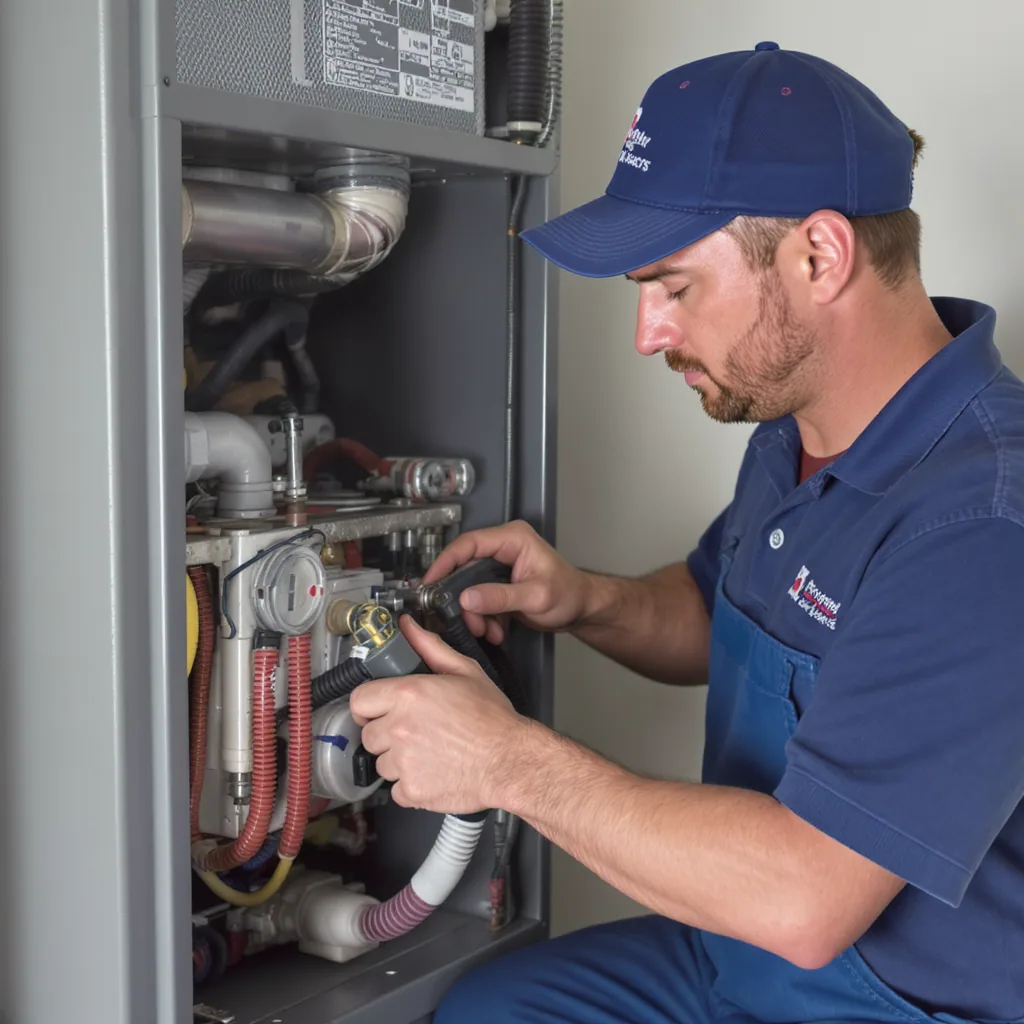
Photo by cottonbro studio on Pexels
Forget the gut feeling or the contractor’s first suggestion. The furnace repair-or-replace decision is a structured audit of three distinct pillars: Financial, Functional, and Foundational. Ignoring any one can lead to a costly misstep. The Financial pillar is about the immediate and long-term dollars: the repair bill versus the total investment in a new system. The Functional pillar assesses performance: efficiency (measured by AFUE), reliability, and your home’s comfort level. The Foundational pillar is non-negotiable: it’s the safety and structural integrity of the unit itself.
Age is the most cited factor, but it’s a poor standalone metric. A furnace’s true age starts at its manufacture date, not its installation date—check the serial number. More critical is its condition and maintenance history. A neglected 12-year-old furnace can be in worse shape than a meticulously serviced 18-year-old one. The key is to gather evidence: What is the unit’s AFUE rating (often on a label inside the cabinet)? How many repairs have you paid for in the last 24-36 months? What was their nature—a simple ignitor or a major component like the blower motor? This multi-factor view prevents you from being swayed by a single data point, whether it’s a scary-sounding repair estimate or a glossy brochure promising high efficiency.
Your decision criteria should be anchored in thresholds, not feelings. We’ll establish those thresholds in the following sections, but they revolve around concrete numbers: a furnace age of 15 years as a major decision inflection point, a repair cost exceeding 50% of a quality replacement, and an AFUE rating below 80% signaling significant efficiency waste. The U.S. Department of Energy provides clear benchmarks for furnace efficiency, which form the basis for calculating potential savings. This framework turns an emotional dilemma into a comparative analysis.
Myth vs. Reality: Debunking Common Furnace Replacement Claims
Marketing language and contractor incentives often cloud this decision. Let’s audit the most common claims to separate evidence-backed reality from persuasive fiction.
MYTH: “A 20-year-old furnace is unsafe and must be replaced immediately.”
REALITY: Age is a risk factor, not a definitive safety verdict. The critical component is the heat exchanger’s condition. A well-maintained 20-year-old furnace with a sound heat exchanger, verified by a professional combustion analysis and visual inspection, may operate safely—though at a high fuel cost. The safety mandate comes from specific failure signals (cracks, CO production, flame rollout), not a calendar date. Replacement may be the prudent choice for efficiency and reliability, but “unsafe due to age” is often an oversimplified sales tactic.
MYTH: “This $1,200 repair will fix it for good.”
REALITY: High-cost repairs on aging systems are frequently precursors to cascading failures. Replacing a control board or blower motor in a 17-year-old unit doesn’t renew the inducer motor, ignitor, or heat exchanger. These components are under similar wear and stress. You’re investing significant money into a system where the next major failure is statistically likely within 1-3 years. This is the “sunk cost fallacy” trap: throwing good money after bad because you’ve already invested so much.
MYTH: “All new furnaces are 98% efficient, so you’ll cut your bill in half.”
REALITY: Marketing cites peak laboratory efficiency (AFUE). Real-world gains depend entirely on proper installation, correct sizing via a Manual J load calculation, and the condition of your home’s ductwork. Leaky, uninsulated ducts can negate 20-30% of a new furnace’s rated efficiency. Furthermore, the efficiency jump is not linear. Moving from a 60% AFUE furnace to a 95% one is transformative. Moving from an 80% to a 96% unit offers solid savings. But the jump from 96% to 98% AFUE is marginal and often comes with a premium price and more complex venting requirements, resulting in a very long payback period. The promised savings only materialize if the entire system is optimized.
The Financial Equation: Repair Cost vs. Replacement Investment
This is where many homeowners get misled by focusing solely on the immediate invoice. The true comparison is between the certain cost of repair and the total investment in replacement, offset by future operational savings and avoided repairs.
The widely cited “50% Rule” is a useful starting threshold: if the next repair quote exceeds 50% of the cost of a high-quality replacement system, replacement is typically the wiser long-term financial decision. Why? Because a repair at that level indicates a major component failure on a system likely nearing the end of its reliable service life. You are essentially paying half the price of a new, warrantied system to temporarily extend an old, failing one.
To apply this rule, you must know the true replacement cost. This is not the equipment sticker price. It includes: the furnace unit itself, professional installation (which is 50% or more of the total cost), any necessary modifications to ductwork, venting, gas line, or electrical, permits, and disposal fees for the old unit. A fair benchmark for a quality, properly installed mid-efficiency (96% AFUE) gas furnace replacement in a standard home ranges from $4,500 to $7,500. Therefore, a repair quote of $2,500+ should trigger a serious replacement quote request.
The final piece is calculating the efficiency payback. Formula: (Net Replacement Cost) / (Annual Fuel Savings) = Simple Payback Period. Net Replacement Cost is (Total New System Cost – Cost of the Avoided Repair). Annual Fuel Savings requires knowing your current AFUE, the proposed new AFUE, and your annual heating cost. As a rule of thumb, each 1% gain in AFUE equals about a 1% reduction in fuel use for that portion of your bill. If your payback period exceeds 8-10 years, the financial argument for replacement weakens unless driven strongly by imminent reliability or safety concerns.
Safety & Efficiency Corner: The Heat Exchanger and AFUE Science
This is the technical core of the decision, where understanding a few key concepts prevents dangerous assumptions.
The Heat Exchanger: Your Safety Firewall. This is a metal chamber where burners heat air without mixing combustion gases (which contain carbon monoxide) with the air circulating through your home. Cracks or holes, caused by metal fatigue from repeated heating/cooling cycles (thermal stress), compromise this barrier. Visual inspection alone is insufficient. A proper inspection, as outlined in many manufacturer technical manuals, involves a pressure test or detailed visual check with a borescope. A cracked heat exchanger is an unequivocal replace-now condition, regardless of other factors.
Bioavailability of Efficiency. Think of a furnace’s AFUE rating like a vitamin’s potency—it’s only “bioavailable” if your home’s “digestive system” (the ductwork) can absorb it. Leaky, uninsulated ducts in attics or crawlspaces can lose 20-30% of the heated air before it reaches your rooms. This devastating loss negates a huge portion of the efficiency you paid for. Before assuming a new 96% AFUE furnace will deliver 96% efficiency to your living space, have your duct system evaluated for leaks and insulation. Sealing ducts is often a high-return upgrade that improves any system’s performance.
Unequivocal Safety Red Flags (Decision Criteria): These conditions mandate immediate system shutdown and professional intervention. They strongly tilt the decision to replace:
- Presence of Carbon Monoxide (CO) from the furnace or in the home air, indicated by a CO alarm or professional meter.
- Flame Rollout: Flames escaping the burner compartment.
- Soot Accumulation inside the furnace cabinet or on components, indicating incomplete combustion.
- A Cracked Heat Exchanger confirmed by a technician using appropriate testing methods.
- A Persistent Gas Odor (not the initial smell at burner ignition).
One short real-world failure mode: A homeowner ignored subtle sooting and occasional dizziness (a CO symptom) to avoid a replacement cost. A minor repair was done. During the next cold snap, a heat exchanger crack widened, leading to measurable CO levels in the home, requiring emergency replacement and evacuation. The preventive action is non-negotiable: Install CO alarms on every level and near sleeping areas, and treat any safety red flag as an immediate shutdown command, not a negotiable repair item.
Side-by-Side Comparison: When to Repair, When to Replace
The following table synthesizes the Financial, Functional, and Foundational pillars into a direct decision matrix. Use it to audit your situation. The “Evidence/Threshold” column provides the concrete anchors—specific conditions, ranges, and tools—that should guide your evaluation, moving you from vague worry to evidence-based action.
Repair vs. Replace Decision Matrix
| Key Decision Factor | Leans Toward REPAIR | Leans Toward REPLACE | Evidence/Threshold |
|---|---|---|---|
| Furnace Age | Less than 15 years from manufacture date. | More than 15 years from manufacture date. | 15 years is the major reliability inflection point. Most manufacturers design for a 15-20 year lifespan. Check serial number for manufacture date. |
| Cost of Next Repair | Less than 50% of a quality replacement system cost. | More than 50% of a quality replacement system cost. | The “50% Rule.” Use a local replacement benchmark of $5,000-$7,500 for calculation. A $3,000+ repair on an older system is a strong replace signal. |
| Efficiency (AFUE) Rating | 80% AFUE or higher, and home is comfortable. | Below 80% AFUE, or consistent comfort issues (cold rooms, short cycling). | AFUE below 80% is considered “low efficiency” with significant fuel waste. The DOE notes modern units reach 95-98.5% AFUE. A 15%+ AFUE gain justifies a payback analysis. |
| Safety Inspection Status | Recent professional inspection confirms: sound heat exchanger, safe combustion, no CO, clean burners. | Any verified safety red flag: cracked heat exchanger, flame rollout, soot, CO production, gas odor. | Safety is binary. Verification requires tools: combustion analyzer, manometer, borescope. Visual guesswork is insufficient. Any confirmed defect mandates replacement. |
| Frequency of Repairs | One minor, isolated repair in the past 2-3 years. | Multiple repairs in the last 2-3 years, or repairs increasing in cost/frequency. | A pattern of failures indicates systemic wear. Two or more $500+ repairs in 24 months signals declining reliability and rising cost of ownership. |
Common Mistakes: Where Homeowners Get Misled
Even with a framework, predictable errors occur. Here’s where the process breaks down, often due to information asymmetry with contractors.
Mistake: Focusing only on the repair bill instead of the total cost of ownership.
Consequence: Paying for a $1,200 repair on a 22-year-old furnace, only to face a $1,500 compressor failure the next winter, resulting in a higher total cost than a planned replacement.
Preventive Action: Request a full system diagnostic and ask the technician for an estimated remaining lifespan and likelihood of near-term ancillary failures. Frame the question: “If I make this repair, what is the most likely next component to fail, and what would that cost?”
Mistake: Accepting a contractor’s replacement quote without verifying the proposed unit’s sizing (Manual J calculation) and efficiency gain specific to your home.
Consequence: An oversized furnace short-cycles, reducing efficiency, comfort, and lifespan. An undersized one won’t keep up. The promised savings never materialize.
Preventive Action: Ask to see the load calculation and for a written estimate of projected annual savings based on your local fuel costs and current AFUE. A reputable installer will provide this.
Mistake: Ignoring safety diagnostics in favor of a cheaper ‘band-aid’ repair.
Consequence: Overlooking a developing heat exchanger crack or failing vent damper, leading to potential CO risk or system failure during extreme cold.
Preventive Action: Insist on a full safety check including combustion analysis and heat exchanger inspection with any repair quote, especially for systems over 15 years old. Consider it a non-negotiable diagnostic fee.
The Tradeoff
The furnace repair-versus-replace dilemma is, at its heart, a tradeoff between a certain, immediate cost and a larger, uncertain future investment. The “right” choice is the one that best manages your total cost of ownership, household risk, and comfort over the next 5-10 years.
Our audit leads to a clear, evidence-based recommendation: If your furnace is under 15 years old, the needed repair is minor (well under 50% of replacement cost), and a professional finds no safety flags, then repair is the rational, economical choice. You are maintaining a capital asset in its prime. Conversely, if your furnace is over 15 years old, repair costs are rising and approaching the 50% threshold, operational efficiency is below 80% AFUE, or any safety issue exists, then replacement shifts from a discretionary expense to a risk-mitigating investment. You are buying predictable operating costs, enhanced safety, and reliable comfort.
The final, most practical step is to gather competing data. Get two professional opinions: one from a company known for thorough repairs and one from a company known for quality installations. Present each with your findings from this framework. Compare their diagnostics, their respect for the evidence (like your unit’s age and repair history), and their proposed solutions. The goal isn’t to find the cheapest option, but to find the recommendation that best aligns with the cold, hard facts of your furnace’s true state. That’s how you make a decision based on tradeoffs, not hype.